




You built the agent. Now how do you let the rest of the company use it — without exposing secrets, blowing budgets, or losing control? Agyn is an open-source, Kubernetes-native agent orchestration platform. Run any AI agent (Claude Code, Codex, custom) at scale with serverless execution, Terraform-managed configuration, and zero-trust networking where credentials never reach the LLM context.
| Problem | Agyn |
|---|---|
| Agents run on individual laptops | Centralized deployment on your infrastructure |
| Secrets passed directly to models | Secrets isolated, never exposed to the model |
| No budget visibility or limits | Spend caps at any level — per agent, per team, per org |
| No access control | RBAC, SSO, audit logs |
| Locked to one vendor | Agent-agnostic, model-agnostic |
| Can't scale | Horizontal scaling, auto-termination on idle |
An open-source, self-hosted alternative to Google AX, AWS Bedrock AgentCore, and Claude Code Cloud for running AI agents in production with full control over security and configuration.
| Capability | Agyn | Google AX | AWS AgentCore | Claude Code Cloud | kagent | Copilot Studio |
|---|---|---|---|---|---|---|
| Self-hostable | ||||||
| Run any agent container | ||||||
| Declarative config (IaC) |
|
|
|
|||
| Serverless (scale-to-zero) | ||||||
| MCP servers isolation | -- | -- | -- | |||
| Secrets never reach LLM | -- | -- | -- | |||
| Zero-trust networking | ||||||
| Per-conversation sandboxing |
- Google AX? — AX sandboxes conversations but not tools from the agent; Agyn isolates each MCP server in its own container and runs any agent without protocol adaptation. Comes with pre-built Claude Code and Codex agents out of the box.
- AWS AgentCore? — Agyn gives you the same serverless execution, self-hosted, with Terraform config and zero-trust access to internal services.
- Claude Code Cloud? — Agyn runs Claude Code as one of many agent containers on your own infrastructure with per-tool credential isolation.
- kagent? — Agyn adds serverless scale-to-zero, agent-agnostic containers, and security isolation beyond Kubernetes RBAC.

The whole platform — control plane, overlay, database, object storage, and a runner — in a VM on your machine. One command, nothing to wire together.
brew install agynio/tap/agyn
agyn local start
The first run downloads the platform image, so give it a few minutes. It asks once whether to trust the VM's CA, then ends with a link to the console. By then you have a running platform, a profile pointing at it, and a CLI already authenticated against it.
See Local installation for prerequisites, flags, and lifecycle commands.
Production is one Helm release from oci://ghcr.io/agynio/charts. The chart deploys the control plane, the workload layer, and the provisioning controller that reconciles the resources the release declares — there is no operator step in the middle.
helm upgrade --install agyn-platform oci://ghcr.io/agynio/charts/agyn-platform \
  --namespace platform --create-namespace \
  -f values-platform.yaml
Name your cluster administrators in the values — a release that declares none installs a platform nobody can administer. See Production installation for prerequisites, DNS and OIDC, optional Kata/Firecracker workload isolation, and upgrades.
Open the console. Create an org. Deploy your first agent.
Want a ready-made fleet to play with? Apply agynio/demo-agent — a Terraform config that provisions a support, marketing, and data-engineer agent in one command.
Stop clicking. Version your agent infrastructure.
resource "agyn_agent" "support" {
  organization_id = agyn_organization.acme.id

  name     = "Support"
  nickname = "support"
  role     = "assistant"

  # The environment supplies the images, compute, and volumes the agent runs with.
  environment_id = agyn_environment.support.id
  model          = agyn_model.gpt_4o.id
  image          = "ghcr.io/agynio/agent-runtime:v1.0.0"

  idle_timeout = "5m"
  availability = "internal"
}

resource "agyn_mcp" "zendesk" {
  agent_id = agyn_agent.support.id
  name     = "zendesk"
  image    = "ghcr.io/acme/zendesk-mcp:latest"
  command  = "zendesk-mcp --port 8080"
}

# The secret is delivered by reference — its value never enters the state file,
# and it is injected into the tool that needs it, not into the agent.
resource "agyn_env" "zendesk_token" {
  name      = "ZENDESK_TOKEN"
  mcp_id    = agyn_mcp.zendesk.id
  secret_id = agyn_secret.zendesk_token.id
}
terraform init && terraform applySee the Terraform provider reference for every resource.
- Serverless runtime — agents spawn on message, scale to zero on idle. No always-on compute.
- Any agent container — Claude Code, Codex, or your own. No protocol adaptation required.
- Environments — one definition pins the runner, compute flavor, images, volumes, and MCP servers every workload gets. Agents and sandboxes both run them.
- MCP servers in separate containers — each tool gets its own filesystem and process tree. Credentials are injected only into the tool that needs them, never into the agent.
- Egress rules — the platform attaches credentials to outbound requests at the network edge and denies destinations you have not allowed. The agent calls out with a placeholder; the real token never enters the container.
- Zero-trust networking — every agent gets its own x509 identity. Deny-by-default access to internal services, including private resources inside your VPC or on-prem network without a bastion.
- Sandboxes — an engineer launches the same runtime an agent gets, with a shell in the browser, and drives it by hand. Same image, same secrets, same egress rules.
- Declarative config — define agents and their harness in Terraform. Version-controlled, peer-reviewed, automated.
- Observability — token usage, compute, tracing, activity logs.
Full architecture: docs/operate/architecture.md.
| Video | What it shows |
|---|---|
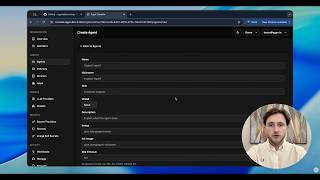 |
Agyn in 3 minutes — From clean cluster to a working agent answering a chat message. End-to-end tour. |
| Coming soon | Deploying agents with Terraform — Define an agent fleet as code, apply it, talk to them. |
| Coming soon | Inspecting a run with Tracing — Every LLM call, every tool execution, every context decision. |
Full docs live in docs/:
- Introduction — what Agyn is, concepts, architecture at a glance.
- Local installation — the whole platform in a VM on your machine.
- Production installation — Helm install, cluster admins, upgrades.
- Administer — Console + Terraform for orgs, agents, models, secrets, runners, apps.
- Use — chat, files, tracing, usage, port exposure.
- Build & extend — Gateway API, MCP servers, agent CLIs, apps.
- Operate — networking, identity, scaling, backups, security.
- Reference — glossary, service catalog, schema pointers.
- Troubleshooting — diagnostic playbook by symptom + FAQ.
Agyn is split across focused repositories. The most useful starting points:
| Repo | What it is |
|---|---|
agynio/platform |
This repo. Documentation hub. |
agynio/architecture |
Source-of-truth architecture and product specs. |
agynio/bootstrap |
Terraform stacks for a k3d dev cluster. For a laptop, prefer agyn local. |
agynio/platform-charts |
Production Helm charts. |
agynio/api |
Protobuf schemas for every service. |
agynio/terraform-provider-agyn |
Terraform provider. |
agynio/agyn-cli |
Platform CLI — also what agyn local runs the platform with. |
agynio/console-app · chat-app · tracing-app · sandboxes-app |
Browser UIs. |
agynio/agyn-runtime-codex · agyn-runtime-claude · agyn-runtime-agn |
Agent runtime images. |
Full list with descriptions: docs/reference/service-catalog.md.
- Agyn: An Open-Source Platform for AI Agents with Scalable On-Demand Execution, Agent Definition as a Code, and Zero-Trust Access (arXiv:2605.27575)
Good places to start:
- Read the architecture docs to understand the system before touching code.
- Join the Discord for questions while you work.
AGPL-3.0