Fractals of the zeta: https://asyncker.github.io/zeta-function/zeta_fractal.html
define ±z̄ = aps(z̄, 2)
aps(z, w) = roots(z^w, w)
f(z)⁻ = 1 - f(z)
f(z)⁺ = 1 + f(z)
define fau, fis, fic:
fau(f, z, t, v, a) = (f(t * 2v - z * v) / f(z * v)) * a
fis(f, z, t, v, a) = (f(t * 2v - z * v) - f(z * v)) * a
fic(f, z, t, v, a) = (f(t * 2v - z * v) + f(z * v)) * a
v = freq (default = 1/2 or 1)
t = shift (default = 1/2 or 0)
a = amp (default = 1/2 or 1)
x = base-power function (default = e or pi)
z = exponent-power function (default = z)
define tau, gau, τ, g and hau/hal/har/h:
tauₓ(z, t, v) = x^(t * 2v - z * v) / x^(z * v) = x^(t * 2v - z * 2v)
gau(z, t, v) = Γ(t * 2v - z * v) / Γ(z * v)
τₓ(z, t) = x^(t - z)
g(z, t) = Γ(t - z/2) / Γ(z/2)

hau(z, w, t) = (t - w) * ln(z)
hal(z, w, t, v) = (t * 2v - w * v) * ln(z)
har(z, w, v) = (w * v) * ln(z)
h(z, w) = -w/2 * ln(z)
Bose-Einstein (-1) and Fermi-Dirac (+1):
τ'(z, t)⁻ / τ(z, t)⁻ = +1 / (e^(z - t) - 1)
τ'(z, t)⁺ / τ(z, t)⁺ = -1 / (e^(z - t) + 1)
Maxwell–Boltzmann (-0) and Maxwell–Boltzmann (+0):
τ'[t](z, t) / τ(z, t) = +1
τ'[z](z, t) / τ(z, t) = -1
The zeros lie on Re(z) = 1/2 for any x ∈ N except x = +1
τₓ(z, 1/2)⁺⁻ = 1 ± x^(1/2 - z)
 |
 |
 |
1 - exp(1/2 - z) |
zeta(z) |
1 + exp(1/2 - z) |
τ'(z, t)⁻ + τ(z, t)⁻ = 1
τ(z, 1/2)⁻ * τ(-z, 1/2)⁻ = 1 + e - sqrt(e) * 2 * cosh(z) = (sqrt(e) - exp(z)) * (sqrt(e) - exp(-z))
τ(iθ, 1/2)⁻ * τ(−iθ, 1/2)⁻ = (1 - sqrt(e))^2 + 4 * sqrt(e) * sin(θ/2)^2
τ(z, 1/2)⁻ - τ(1 - z, 1/2)⁻ = 0 + 2 * sinh(z - 1/2)
τ(z, 1/2)⁻ + τ(1 - z, 1/2)⁻ = 2 - 2 * cosh(z - 1/2)
u(z, t) = e^(z - t) - 1
u'(z, t) / u(z, t) = 1 / (1 - e^(t - z)) = (1 / (e^(z - t) - 1)) * e^(z - t)

1 / τ(z, t)⁻ = 1 / (1 - e^(t - z))
(z / (1 - exp(t - z)))' = ?
((1 - exp(t - z)) / z)' = ?
g'(z, t)⁻ / g(z, t)⁺ = ?
±f(z, u, t) = u / (t * z^2) * (exp(u / (z * t)) / (exp(u / (z * t)) - 1))

h(z, w)'[w] = -1/2 * ln(z)
h(z, w)'[z] = -w / 2z
h(z, w)'[z] / h(z, w) = 1 / (z * ln(z))
h(z, w) = hau(z, w, w/2)
h(z, w) + h(z, −w) = 0
h(2, 4) = -ln(4) = ln(1/4) = -2 * ln(2)
z^(-w/2) = exp(h(z, w))
z^(-w/2) - z^(w/2) = -2 * sinh(w/2 * ln(z))
z^(-w/2) + z^(w/2) = +2 * cosh(w/2 * ln(z))
ζ((z^2)^(1/2)) + c (c = -ln(4))
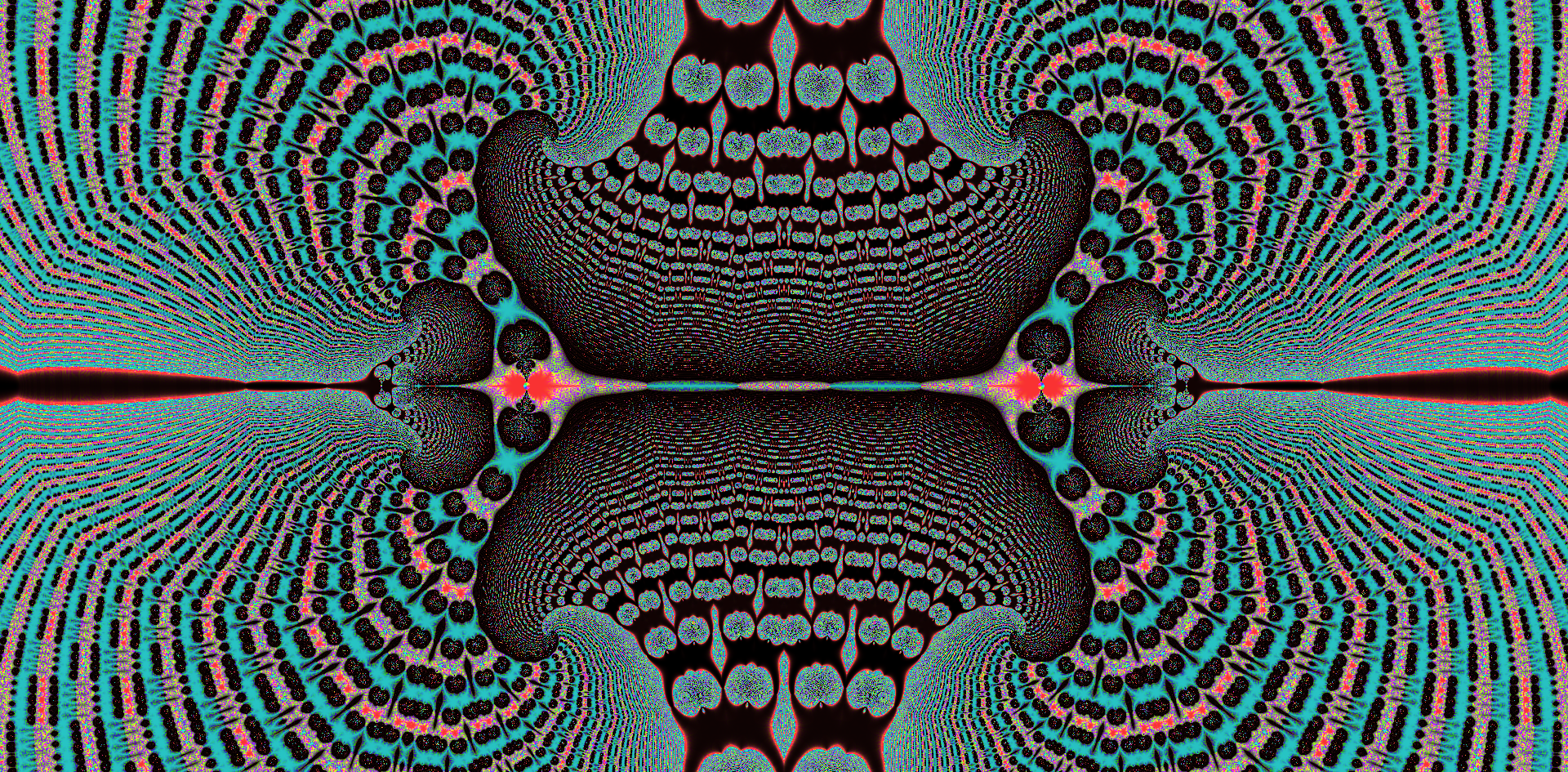
ζ((z^2)^(1/2)) + c (c = -ln(4))
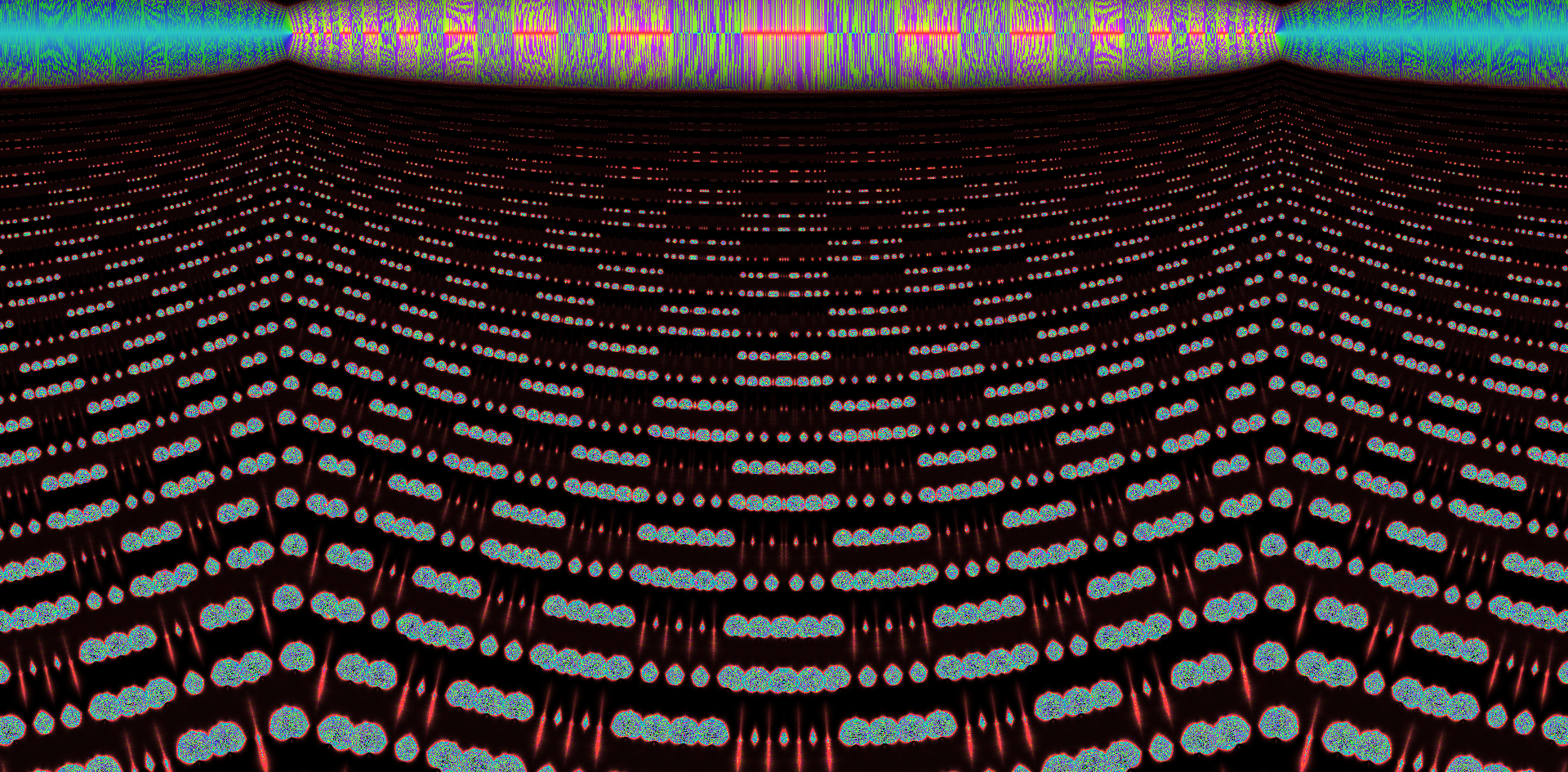
ζ(±z) - c (c in {2*ln(2), sqrt(2), 2, 2±eps, 1/2, e/2, ~pi/2})
ln(4) = 2 * ln(2), which is also the natural logarithm of the entropy of two independent bits. Is it most likely just a numerical coincidence?
τ((z^2)^(1/2), 1/2)⁻
%5E(0.5)%2C0.5).png)
X(z) = zeta(z) / zeta(1 - z)
1 / X(z) = zeta(1 - z) / zeta(z)
X(z) = gamma(1/2 - z/2) / gamma(z/2) * pi^(-1/2 + z)
zeta(z) = gamma(1/2 - z/2) / gamma(z/2) * pi^(-1/2 + z) * zeta(1 - z)
zeta(z) = (2*pi)^(z - 1) * sin(z * pi/2) * 2 * gamma(1 - z) * zeta(1 - z)

X(z) = 2pi^z / (gamma(z/2) * gamma(1 - z/2)) * gamma(1 - z)
X(z) = exp((z - 1) * ln(2pi)) * exp(-i*pi/2) * (exp(z * i*pi/2) - exp(-z * i*pi/2)) * gamma(1 - z)

eta(z) = ((1 - 2^(1-z)) / (1 - 2^z)) * 2^z * pi^(z - 1) * sin(z * pi/2) * gamma(1 - z) * eta(1 - z)
zeta(z) = gamma(1/2 - z/2) / gamma(z/2) * pi^(-1/2 + z) / (1 - 2^z) * eta(1 - z)
zeta(z) = eta(z) / (1 - 2^(1 - z))
sin(z * pi/2) * 2i = (1 - (-1)^(-z/2)) - (1 - (-1)^(z/2))
sin(z * pi/2) * 2 = ((-1)^(z/2) - (-1)^(-z/2)) * -1i
amplitude: -2, +2
inter: ...-2, +2, −2,    +2, -2, +2...
zeros: ...-6, -4, -2, 0, +2, +4, +6...
1 - (-1)^(-z)
amplitude: 0, +2
Hypothesis: all zeros of the 1 - gamma(1/2 - z/2) / gamma(z/2) * pi^(-1/2 + z) with Re(z) > 0 and Re(z) < 1 lie on the critical line Re(z) = 1/2
define cmin, cmax, relumax, relumin, relu-curve ai:
cmin(z, w) = min(Re(z), Re(w)) + min(Im(z), Im(w)) * i
cmax(z, w) = max(Re(z), Re(w)) + max(Im(z), Im(w)) * i
cmin(cmax(zeta(z), -1/eps), 1/eps) ~= re(zeta(z))
cmin(cmax(zeta(z) * -i, -1/eps), 1/eps) ~= im(zeta(z))
relumax(z) = cmax(z, 0)
relumin(z) = cmin(z, 0)
relumax(z) + relumin(z) = z
relumax(z) - relumin(z) = +|Re(z)| + |Im(z)|*i
relumin(z) - relumax(z) = -|Re(z)| - |Im(z)|*i
y = ±relumax(log(x^3 - 2x + 2))
Empty ◇ means there is no function value at this point. All functions except the equal sign (=) are prohibited, and ◇ is not equal to anything except itself.
x = ◇ // float x;
x = 2
relumaxU(z) = z >= +0 ? z : ◇
reluminU(z) = z <= -0 ? z : ◇
define mpow (w ∈ ℕ):
mpow(z, w) = |z|^w * exp(i * arg(z) * (1 - (-1)^w) / 2)
A function can be given its cosine (re) and sinus (im) decompositions
re(gamma(x + 1i)) it's re-grow
im(gamma(x + 1i)) it's im-grow
re(gamma(1 + xi)) it's re-wave
im(gamma(1 + xi)) it's im-wave
define Γₚ, pgamma, gsi, gsiₚ
prime-function and eta-function factor:
τₚ(z, 0)⁺⁻ = 1 ± p^(0 - z)
τ₂(z, 1)⁻ = 1 - 2^(1 - z)
gsiₙ(z) = Γₙ(1-z) / Γₙ(z)
gsiₚ(z) = Γₚ(1-z) / Γₚ(z)
Hypothesis: all zeros of the gsiₚ(z)⁻ with Re(z) > 0 and Re(z) < 1 lie on the critical line Re(z) = 1/2
gsiₙ(z) zeros on 1/2 with natural numbers:
im(gsiₙ(1/2 + it)⁻) = 0 |t={2.7485719, 4.0333153, 5.0685937, 5.9864659, 6.8314286, 7.6251207, 8.3800571, 9.1042716, 9.8032975, 10.4811442, 11.1408316, 11.7847041, 12.4146264, 13.0321124, 13.6384114, 14.2345698, 14.8214748}
re(gsiₙ(1/2 + it)⁻) = 0 |t={2.1497679, 3.3145783, 4.6410998, 5.4849802, 6.4581080, 7.1985308, 8.0367949, 8.7191070, 9.4801506, 10.1233064, 10.8325004, 11.4466874, 12.1178667, 12.7093569, 13.3510553, 13.9240575, 14.5419829}

gsiₚ(z) zeros on 1/2 with prime numbers:
im(gsiₚ(1/2 + it)⁻) = 0 t={1.0293, 5.5865, 9.13, 11.79, 14.13, 16.29, 18.34, 20.29, 22.18, 24.01, 25.89, 27.55, 29.26, 30.95, 32.61, 34.24, 35.86, 37.45, 39.03, 40.6}
re(gsiₚ(1/2 + it)⁻) = 0 t={8.25, 10.00, 13.38, 14.88, 17.64, 19.03, 21.51, 22.84, 25.15, 26.44, 28.63, 29.89, 31.99, 33.22, 35.25, 36.46, 38.44, 39.63, 41.55, 42.73}
define zeta‑based functions as symmetric combinations of ζ
 |
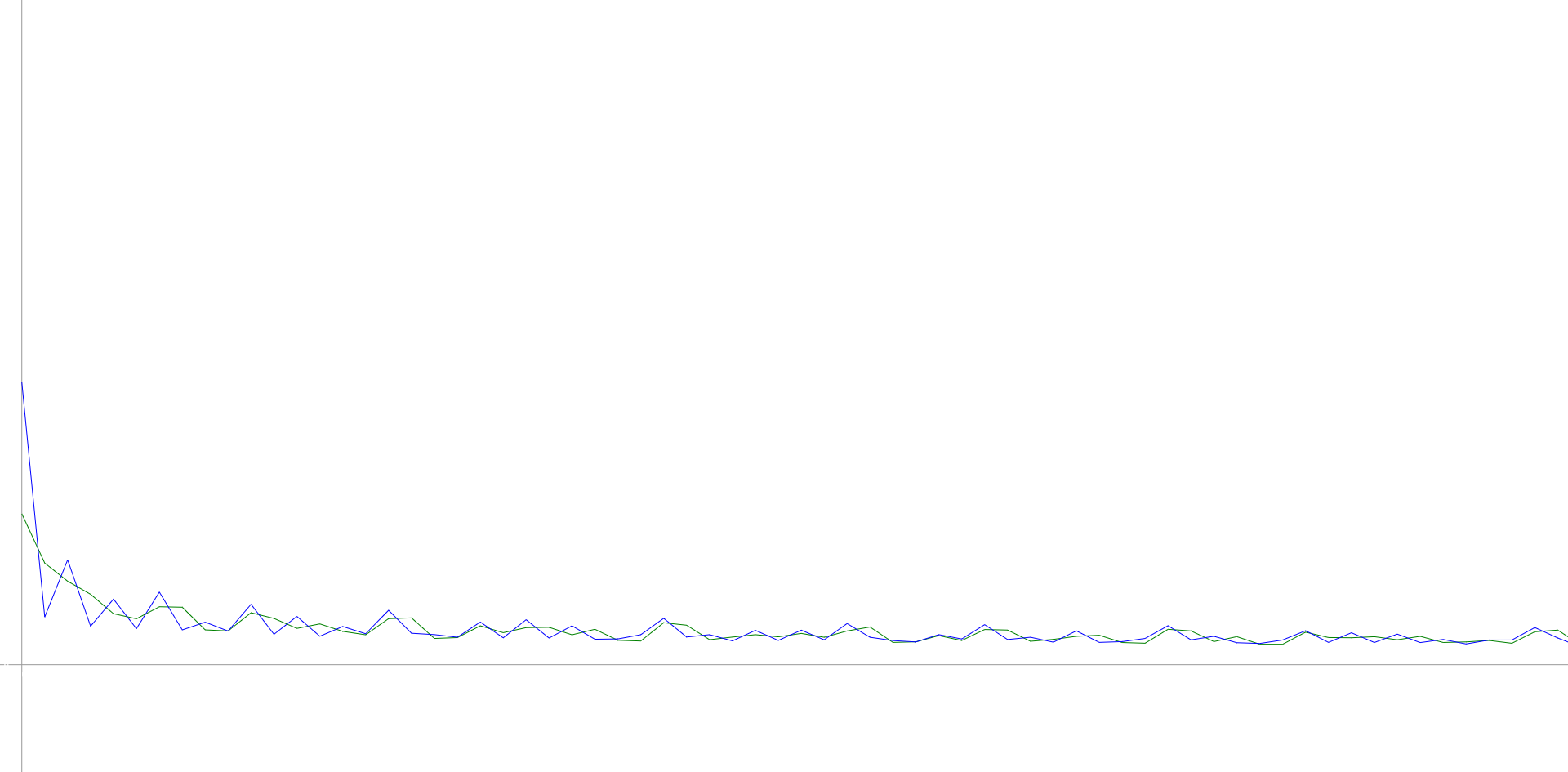 |
zeros zsinh (green), zcosh (blue), t = 0 |
subtract zeros zsinh (green), zcosh (blue), t = 0 |
The zeros of zsinh(z, t) lie where Im(ζ(z + t))
The zeros of zcosh(z, t) lie where Re(ζ(z + t))
The zeros of f(x) lie where Im(ζ(iz) * ζ(-iz))
Hypothesis: The roots of the zeta-cosine function consistently become greater than the roots of the zeta-sine function. Does this always hold true for t<1/2? For t=1/2, this rule is violated.
Reason for the alternation of zeros: the phase of arg(ζ(it)) changes almost monotonically, its derivative ~= −ln(t/2pi) plus limited fluctuations, and with increasing t, the logarithm suppresses the fluctuations more and more. The zeros of Re (phase ≡ pi/2 mod pi) and the zeros of Im (phase ≡ 0 mod pi) must strictly alternate with a monotonic phase.
zsinh_zeros[i] < zcosh_zeros[i] // 30k all true except first (t < 1/2)t = 1/2 - 0.00001
3.43621400940427, 0.81955124399808, 9.66691026271173, 14.1346623378012, 14.1347267337240, 14.5179833560666, 17.8455997038111,
20.6539992177491, 21.0220373965483, 21.0220842314575, 23.1702821112028, 25.0108287890044, 25.0108610531865, 25.4915386782135,
27.6701825613616, 29.7384907914406, 30.4248701666825, 30.4248929060160, 31.7179796105915, 32.9350461254213, 32.9350680548172,
33.6238113619786, 35.4671838452361, 37.2567074304069, 37.5861751320591, 37.5862111935404, 38.9992117507559, 40.6999543309432,
40.9187169370250, 40.9187671906725, 42.3635472250736, 43.3270600163924, 43.3270808195068, 43.9935435698699
define dot, dotlog, dotpow, sop, soplog, soppow:
dot(z, w) = z * w̄
dotlog(z, w, k) = log(z * w̄) * k
dotpow(z, w, k) = exp(log(z * w̄) * k)
sop(z, w) = z / w̄
soplog(z, w, k) = log(z / w̄) * k
soppow(z, w, k) = exp(log(z / w̄) * k)
|z| = dotpow(z, z, 1/2)
define als, abs, phs, aps
als(z, w) = sqrt(z * w)
abs(z, w) = sqrt(z * w̄)
phs(z, w) = sqrt(z / w̄)
aps(z, w) = roots(z^w, w)
zeta bicomplex 4d with idempotent
BL(z) = (z.x - z.w) + (z.y + z.z) * i
BR(z) = (z.x + z.w) + (z.y - z.z) * i
BW(z, w) = 1/2 * (w.x + z.x, z.y + w.y, z.y - w.y, w.x - z.x)
bizeta(z) = BW(ζ(BL(z)), ζ(BR(z)))

Non-Archimedean + Hyperreal + p-adic + Laurent Ring
Ring two points ±0, ±∞ any graph gamma, 1/x form a continuous and non-tearing curve filling all 1d space. Start 0 or ∞ with shift
                ±0 (0)
          -1 (0)    +1 (0)
        -2 (0)        +2 (0)
         .             .
        -2 (∞)        +2 (∞)
          -1 (∞)    +1 (∞)
                ±0 (∞)
-3 (0), -2 (0), -1 (0), 0 (0), +1 (0), +2 (0), +3 (0)
-3 (∞), -2 (∞), -1 (∞), 0 (∞), +1 (∞), +2 (∞), +3 (∞)

2 + ∞ = 2 (∞)
2 + 0 = 2 (0)
define Φ₆ complex:
Φ₆(z, w) = 1 + (z^w - 1) * z^w
Φ₆(z, w) = z^(2w) - z^(1w) + 1
Φ₆(10, 2) = 9901
Φ₆(10, 4) = 99990001
Φ₆(10, 6) = 999999000001
Φ₆(10, 8) = 9999999900000001
33333333333333336666666666666667 = 7 * 13 * 37 * 9901 * 99990001 * 9999999900000001
a = 2^n * 5^m (all non-periodic fractions for the 10-adic)
add ptlim, count, asymtotic. ptlim - test to see if a number is prime as n approaches +∞ and at what n this ends.
ptlim(10^n) = ∅
ptlim(2n + 1) = {1, 2, 3, 5, 6, 8, 9, 11, 14, 15, 18, 20...}
ptlim(10^n + 7) = {1, 2, 4, 8, 9, 24, 60, 110, 134, 222, 412, 700, 999...}
ptlim(10^(2n) - 10^(1n) + 1) = {2, 4, 6, 8}
ptlim(12 * (2^n - 1) - 1) = {1, 3, 4, 7, 9, 12, 15, 16, 25, 37, 40, 43, 49, 72, 75, 124, 180, 196, 208, 312, 480, 568, 1113, 1729, 2244, 3129...}
ptlim(2^n * 3 - 1) = {0, 1, 2, 3, 4, 6, 7, 11, 18, 34, 38, 43, 55, 64, 76, 94, 103, 143, 206, 216, 306, 324, 391, 458, 470, 827, 1274, 3276, 4204, 5134, 7559, 12676, 14898, 18123, 18819, 25690, 26459, 41628, 51387, 71783, 80330, 85687, 88171, 97063, 123630, 155930, 164987, 234760...}
ptlim(2^n * 33 - 65) = {2, 3, 4, 5, 7, 9, 13, 15, 16, 18, 19, 20, 21, 23, 26, 27, 37, 40, 43, 45, 46, 53, 55, 56, 58, 59, 62, 64, 69, 79, 81, 85, 98, 106, 146, 154, 173, 179, 197, 289, 331, 359, 602, 612, 615, 657, 675, 823, 885, 901, 931, 988, 1033, 1039, 1089, 2313, 2671, 3066, 3203, 3813, 4735, 4786, 5114, 5384, 5823, 5832, 6610, 6817, 7800, 10432, 13009, 14802, 18577, 18841, 20612, 23037, 23877, 25673, 27951, 34276, 35656, 36358, 38224...}
ptlim(2^n * 14388 - 12545) = {1, 2, 3, 6, 7, 8, 9, 10, 11, 12, 14, 15, 16, 20, 29, 31, 34, 35, 41, 43, 50, 61, 74, 79, 82, 83, 89, 97, 113, 118, 125, 128, 130, 148, 173, 190, 202, 230, 257, 273, 295, 331, 339, 368, 373, 397, 419, 421, 497, 507, 513, 525, 541, 646, 869, 959, 1302, 1843, 2431, 3103, 3220, 3459, 3947, 4099, 4226, 5241, 5467, 5841, 6531, 6574, 6617, 6669, 6936, 8133, 11145, 12125, 12790, 13115, 15760, 16711, 21593, 27521, 27811, 28367, 29795, 31556, 38861...}

Asymptotic and count function ptlim:
count(ptlim(n)) = pi(n) = count({2, 3, 5, 7, 11, 13, 17...}) = {0, 0, 1, 2, 2, 3, 3, 4, 4, 4, 4, 5, 5, 6, 6, 6, 6, 7...}
count(ptlim(n)) ~ ceil(x / (ln(x) - 1))
count(ptlim(2^n - 1)) ~ floor(ln(x) * 2)
count(ptlim(2^n * 33 - 65)) ~ floor(ln(x) * 7)
any-adic set coordinate by initial numbers: (naturals, fibbonachi, squares, prime, random and etc.)
nₚ = {...-11, -7, -5, -3, -2, 0, +2, +3, +5, +7, +11...}

Re(xₚ) = linear(nₚ) add rational and irrational numbers between primes

for all Re(xₚ) create Re(xₚ) * i its Im(xₚ) get zₚ
if use coordinate you get automatic naturals to prime:
p-1 = 1, 2, 4, 6, 10, 12, 16, 18, 22... zₚ-1
p*2 = 4, 6, 10, 14, 22, 26, 34... zₚ*2
p^2 = 4, 25, 49, 121, 169... = zₚ^2
2^p = 4, 8, 32, 128, 2048, 8192, 131072... = 2^zₚ
p!  = 2, 6, 120, 5040, 39916800... = gamma(zₚ)
p^p = 4, 27, 3125, 823543, 285311670611... zₚ^zₚ
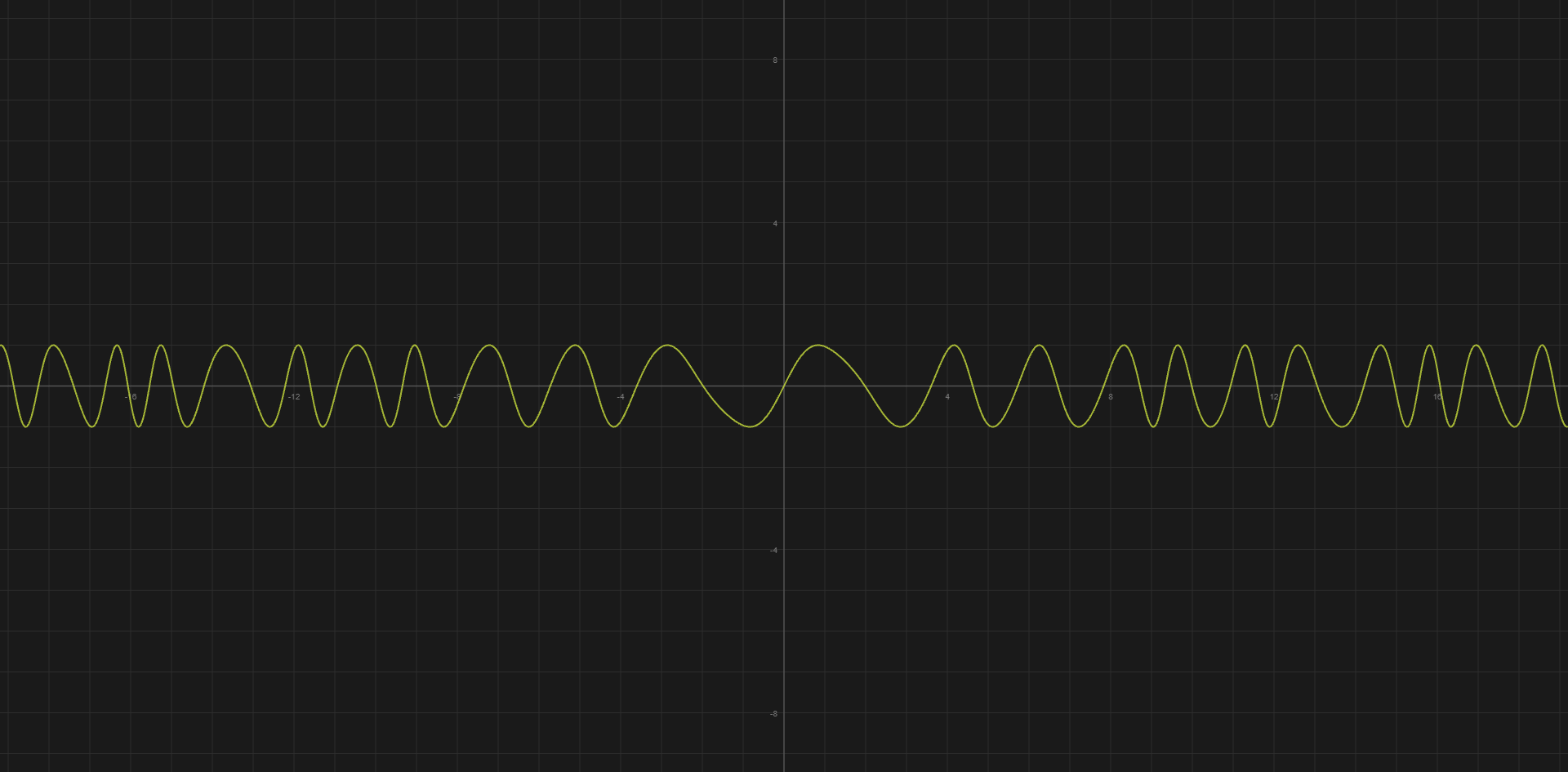 |
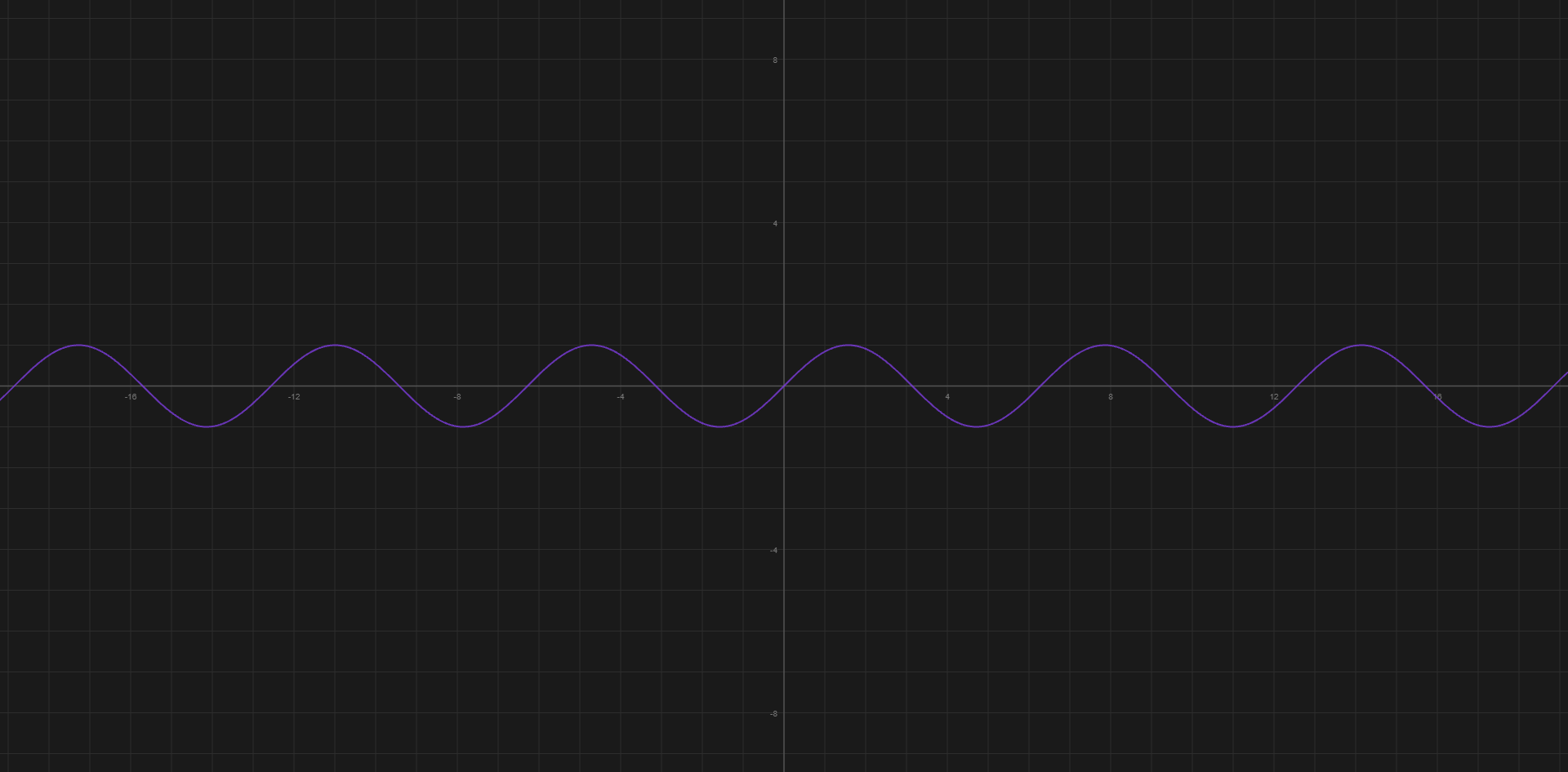 |
sin(xₚ) | xₚ = bspline(primes) |
sin(xₙ) | xₙ = bspline(naturals) |
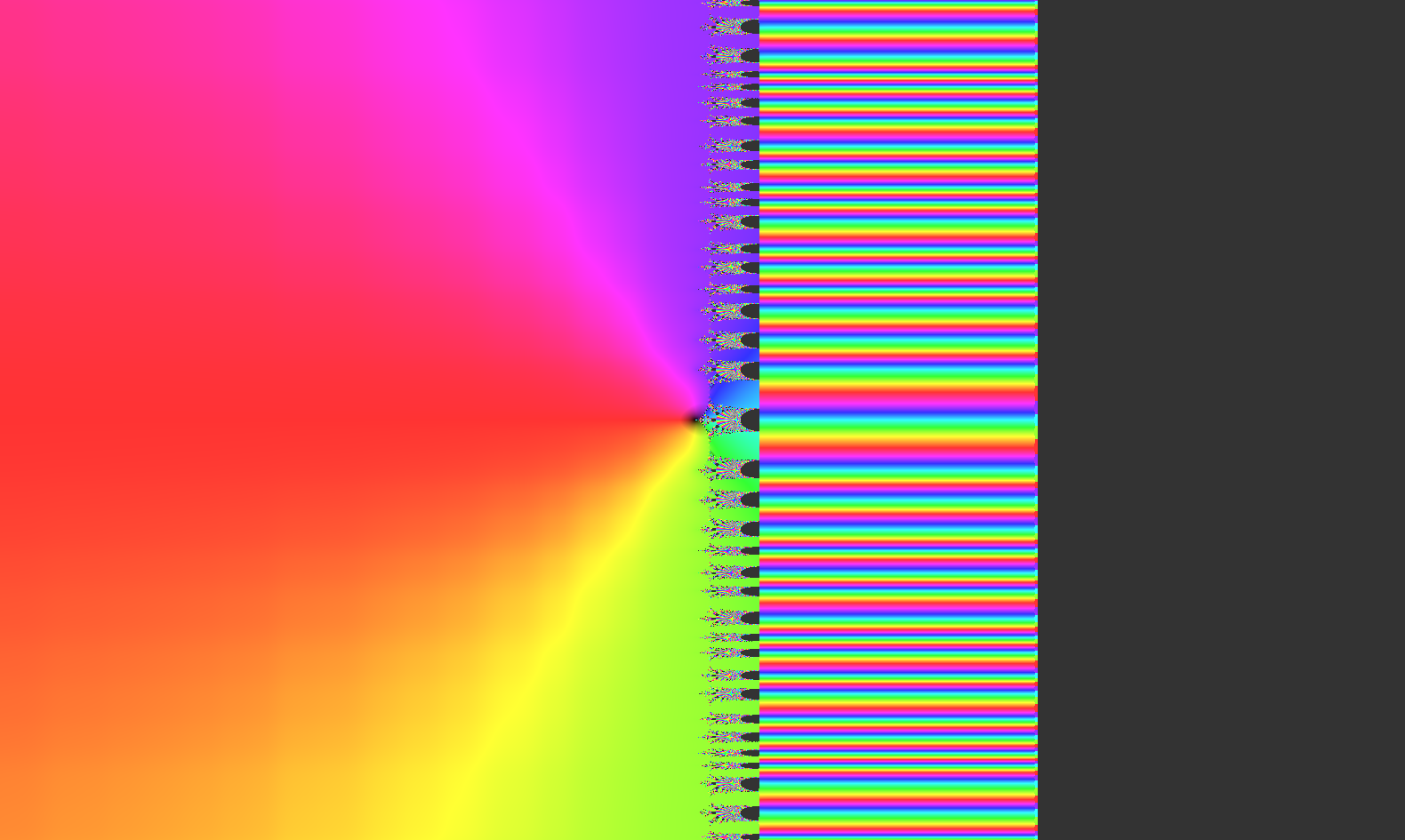 |
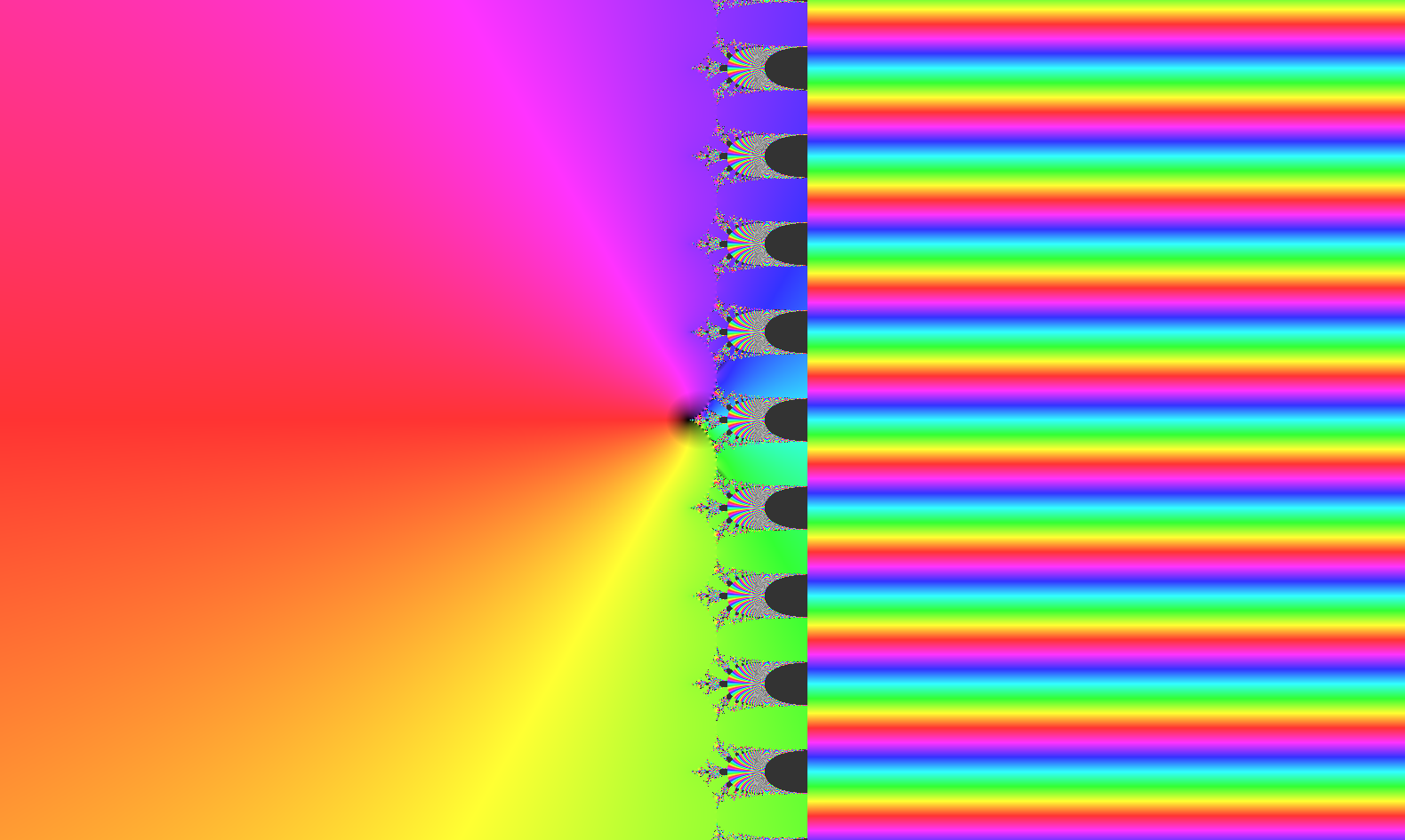 |
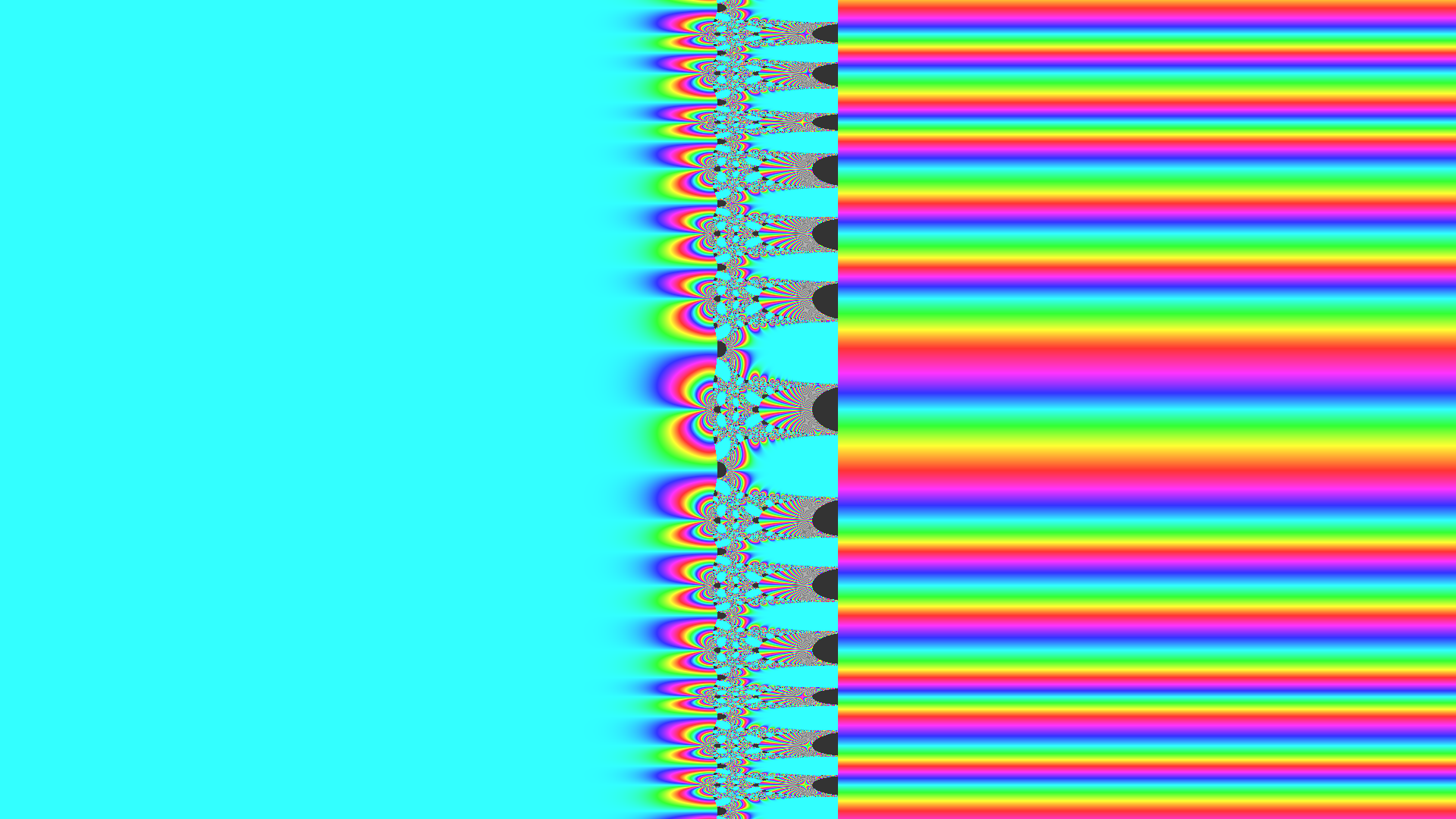
exp(zₚ) + cₚ |
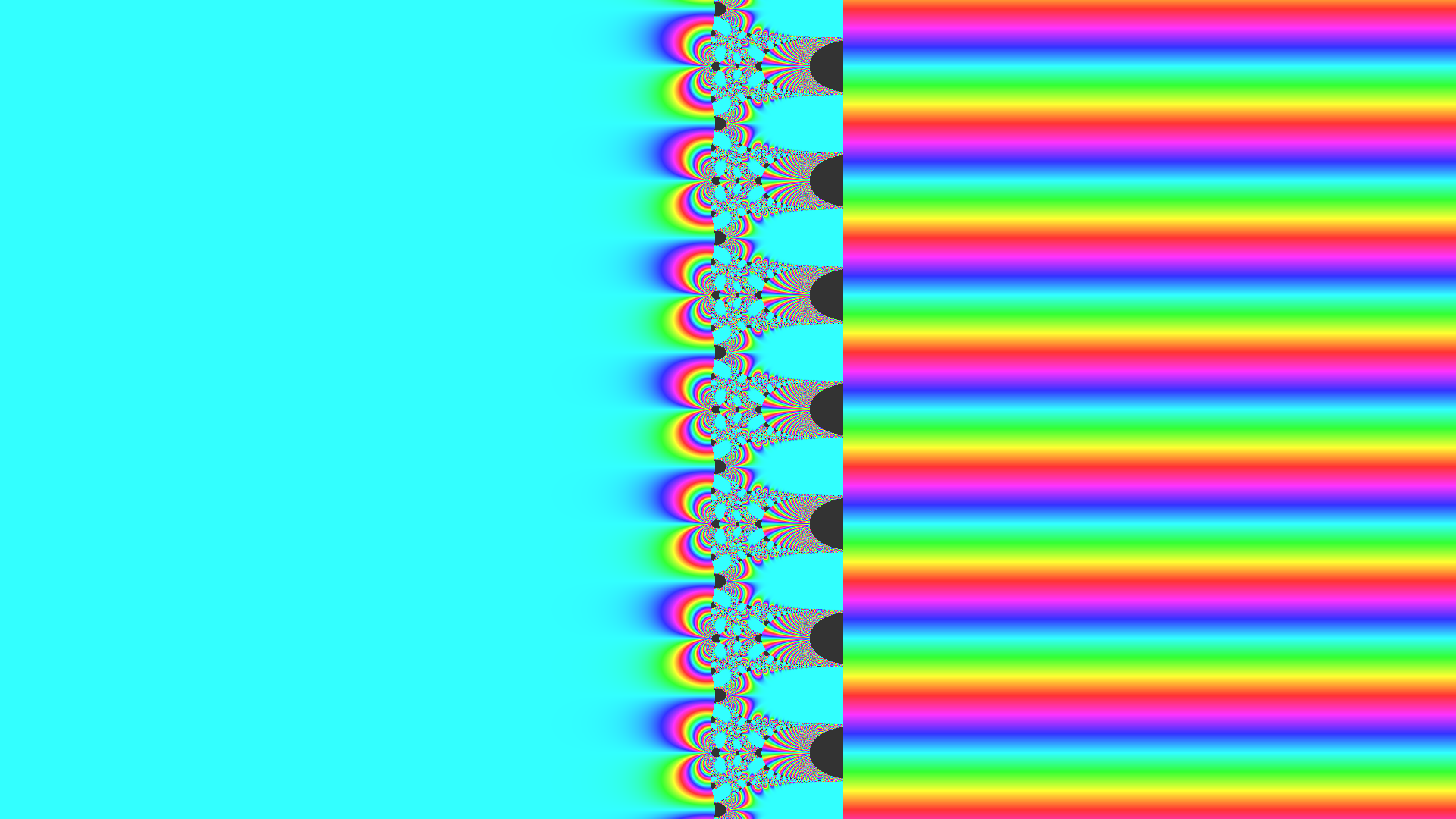
exp(zₙ) + cₙ |
 |
 |
exp(zₚ) (scale 1:1) |
exp(zₙ) (scale 1:1) |
family of gamma (if x<0 switch sign {-1, +1} to {+1, -1} in prime, random, etc.), exp (2pi * prime, 2pi * random, etc.)
Γ(z, s = {2, 3, 5, 7...}) = 1 / (z · e^γz · ∏ₛ((1 + z/n) · e^(−z/n)))
e(z, s = {2, 3, 5, 7...}) =
epsilon and omega numbers:
eps = 1 - 0.999999... (eps ≠ 0)
eps^-1 = w
w^-1 = eps
(x - 1) * 1/x = 1 - eps
x = w

7 / x^2 = eps
x = ±sqrt(7 * w)
w * eps = 1
ln(eps) = -ln(w)
ln(w) = -ln(eps)

ln(w^eps) = -eps * ln(eps)
ln(eps^w) = -w * ln(w)
ln(eps^eps) = -eps * ln(w)
ln(w^w) = -w * ln(eps)
ln(eps^2 + eps^2) * k = ln(2)*k + ln(eps) * 2k
(eps^2 + eps^2) ^ k = 2^k * eps^(2k)
roots(eps^2, 2) = ±eps

sym(x) = (|f(x - eps)| + |f(x + eps)|) / 2
signs(x) = { sign(f(x - eps)), sign(f(x + eps)) }; // {-, -} {-, +} {+, -} {+, +}
signs(gamma(-1)) = {+, -}
signs(gamma(-0)) = {-, +}
signs(1 / 0) = {-, +}
(|gamma(-0 - eps)| + |gamma(-0 + eps)|) / 2 = ~(1/eps + eps)

3 * 0.333 + 0.001 = 1.0
3 * 0.333333... + eps = 1.0
(w - 1) * w + 1 = 999999... 000000... 001.0
(w - 1) * 1/w = 0.999999...
(1 - eps) * 1/eps = 999999... 999.000000...
999999... + 0.999999... = 999999... 999.999999...
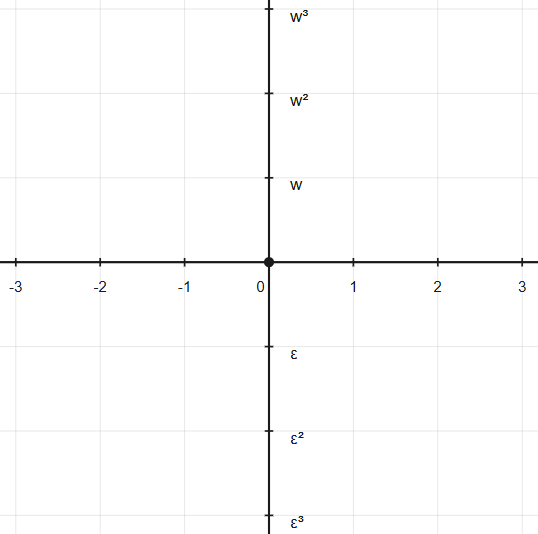
Scale plane (x-asis it's mult coefficient for eps or w y-asis it's power (example x * eps^y)):