
One-page cheat sheets and diagrams for developers and engineers building data, ML, and AI applications. Each one links to the ML4Devs article.
- Cheat Sheets
- Big Data Pipelines on AWS, Azure, and Google Cloud
- SQL vs. NoSQL: Cheat Sheet for AWS, Azure, and Google Cloud
- MLOps Cheat Sheet: Google Cloud
- Cloud Deployment Cheat Sheet for AWS, Azure, and Google Cloud
- SQL Joins Cheat Sheet
- Popular Machine Learning Models
- 5 Faster Alternatives to Pandas DataFrame apply()
- Diagrams
All cheat sheets and diagrams are © Satish Chandra Gupta and licensed under CC BY-NC-ND 4.0. Share them with credit and a link to the source page. For commercial use or adaptations, get in touch.
The five stages of a big data pipeline (capture, ingest, store, compute, and use), with orchestration and data catalog services, mapped to AWS, Azure, and Google Cloud.
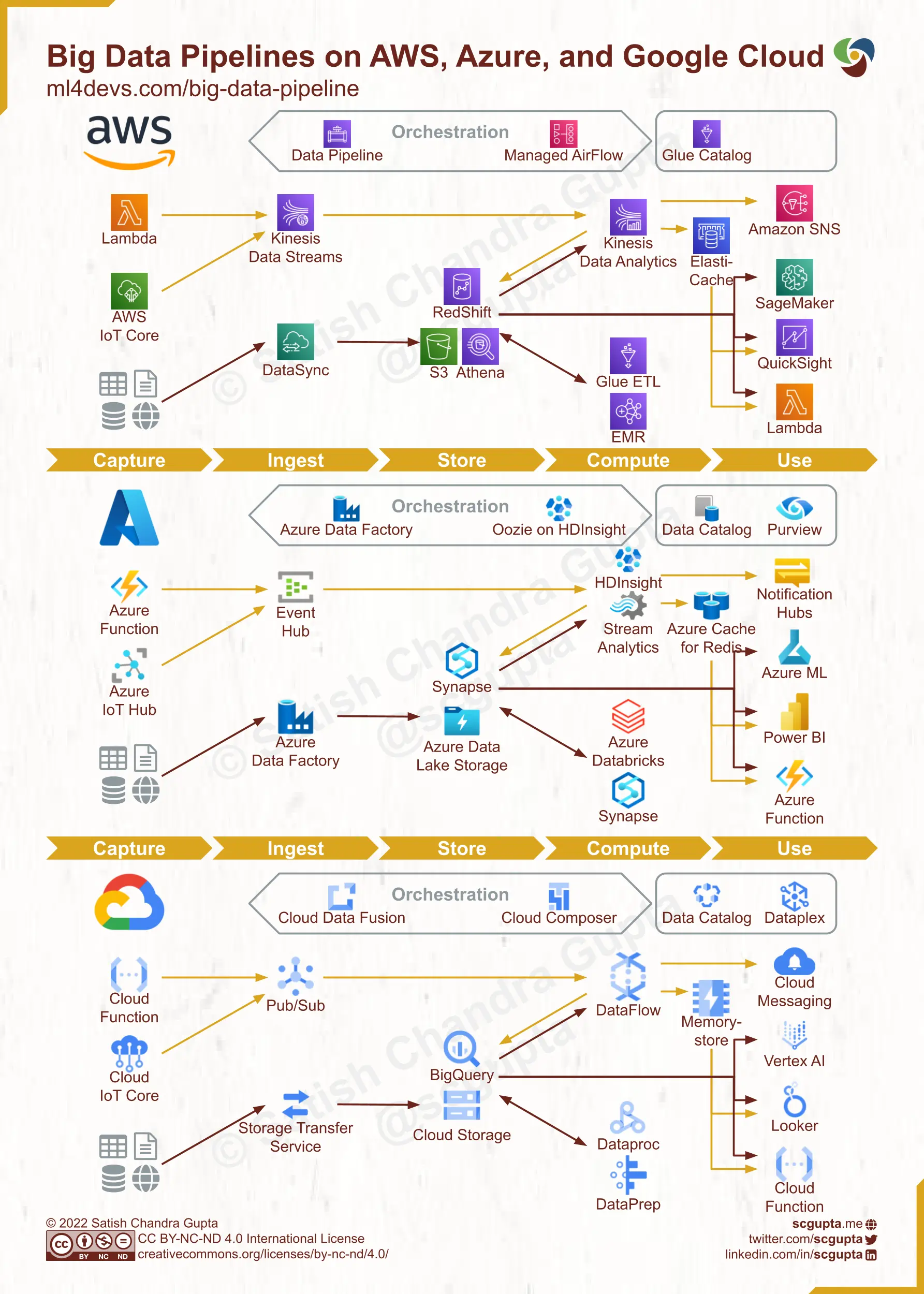
Article: Big Data Pipeline Architecture: Patterns and Design Guide
A decision tree from data type and use case to relational, columnar, key-value, in-memory, wide column, time series, ledger, geospatial, graph, document, text search, or blob storage, with the matching databases on each cloud.
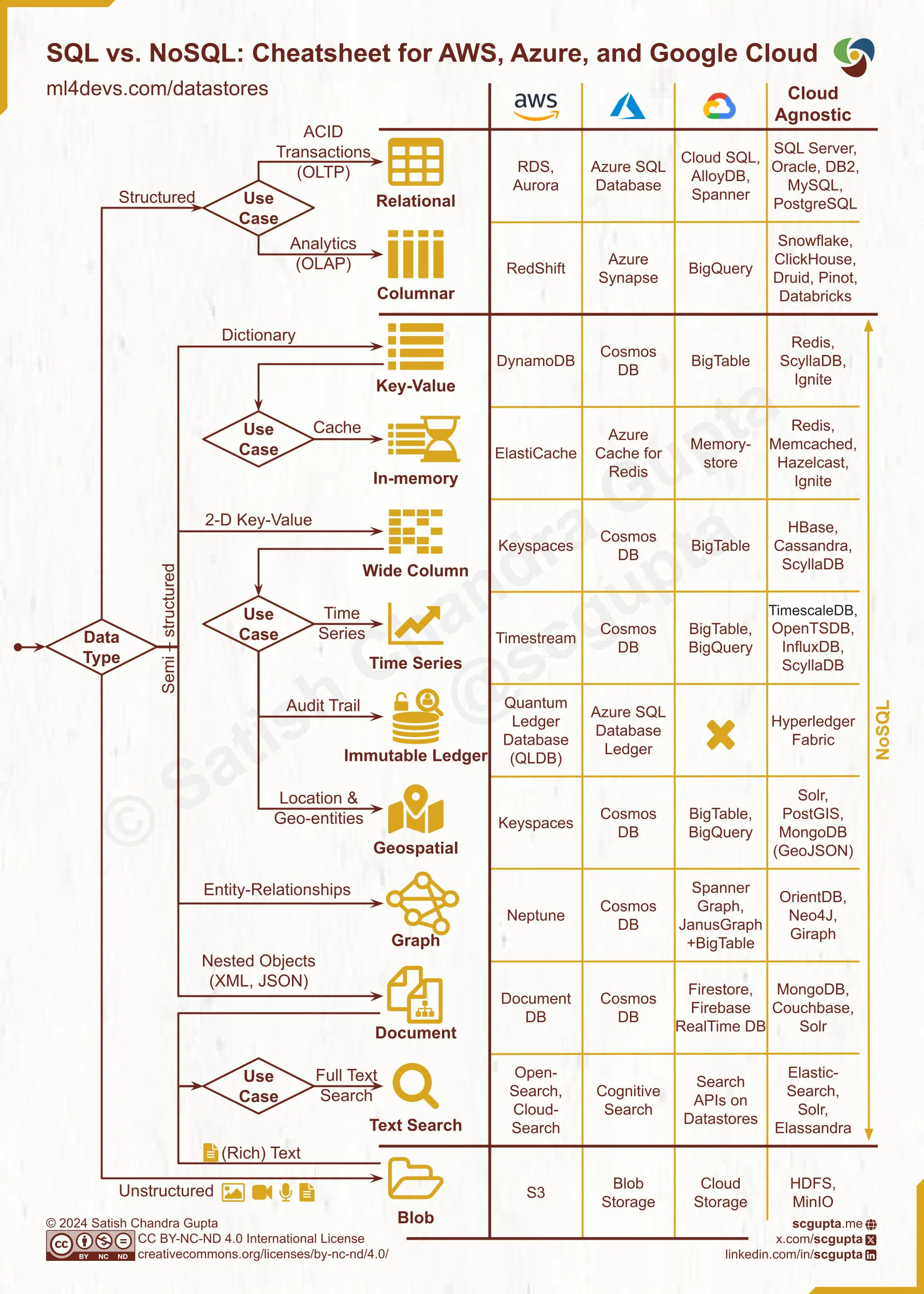
Article: SQL vs. NoSQL Database: When to Use, How to Choose
Vertex AI and Google Cloud data services across the Data, ML, Dev, and Ops loops of the machine learning lifecycle, as of 2023.

Article: MLOps Tools & Services
A decision tree for new builds and migrations that picks IaaS, CaaS, serverless CaaS, PaaS, or FaaS, with the matching compute service on each cloud.
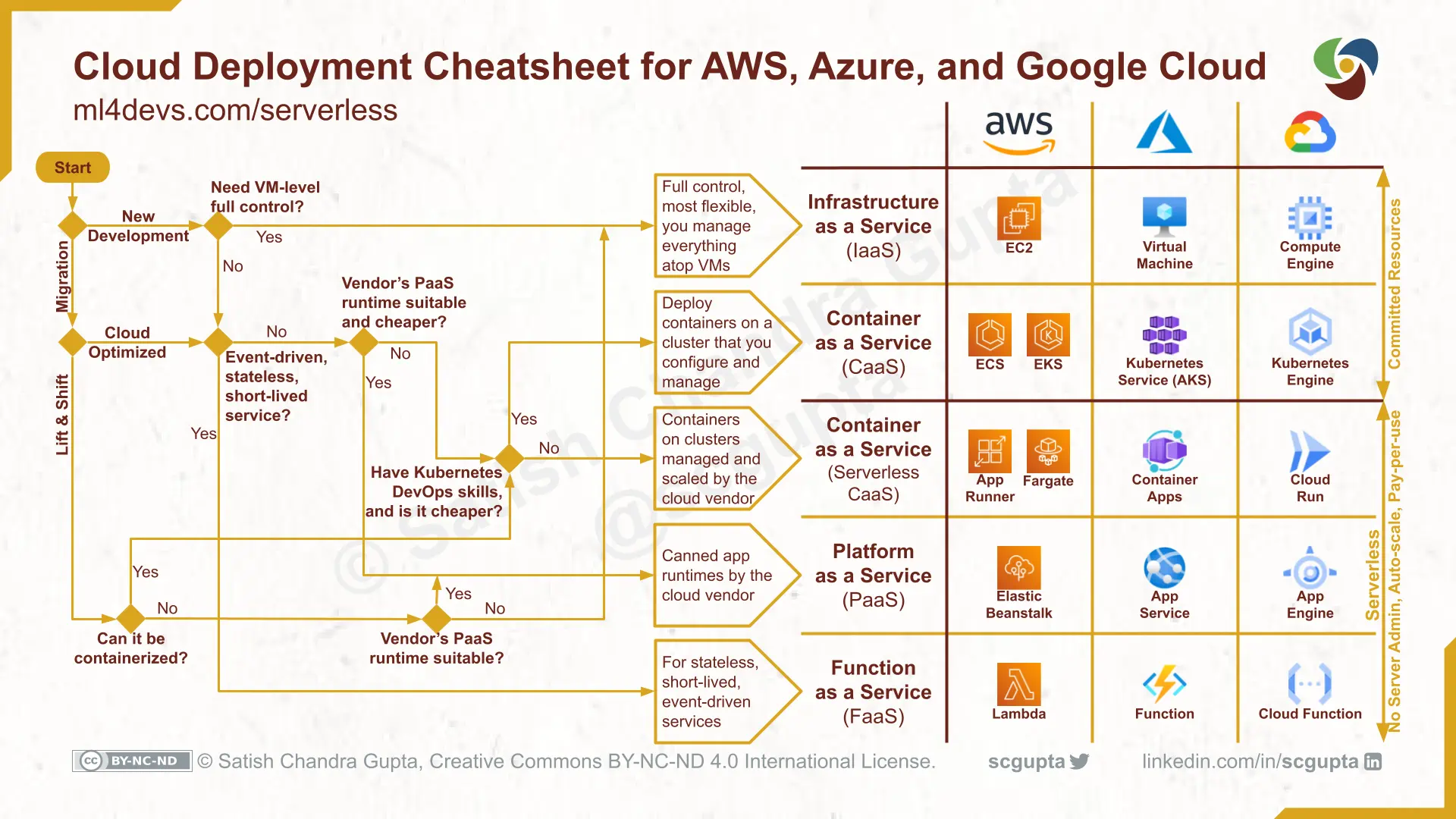
Article: Serverless Computing on AWS, Azure, and Google Cloud
Inner, left, right, and full outer joins: the SELECT syntax, a Venn diagram, how the keys match, and the result table with NULLs.
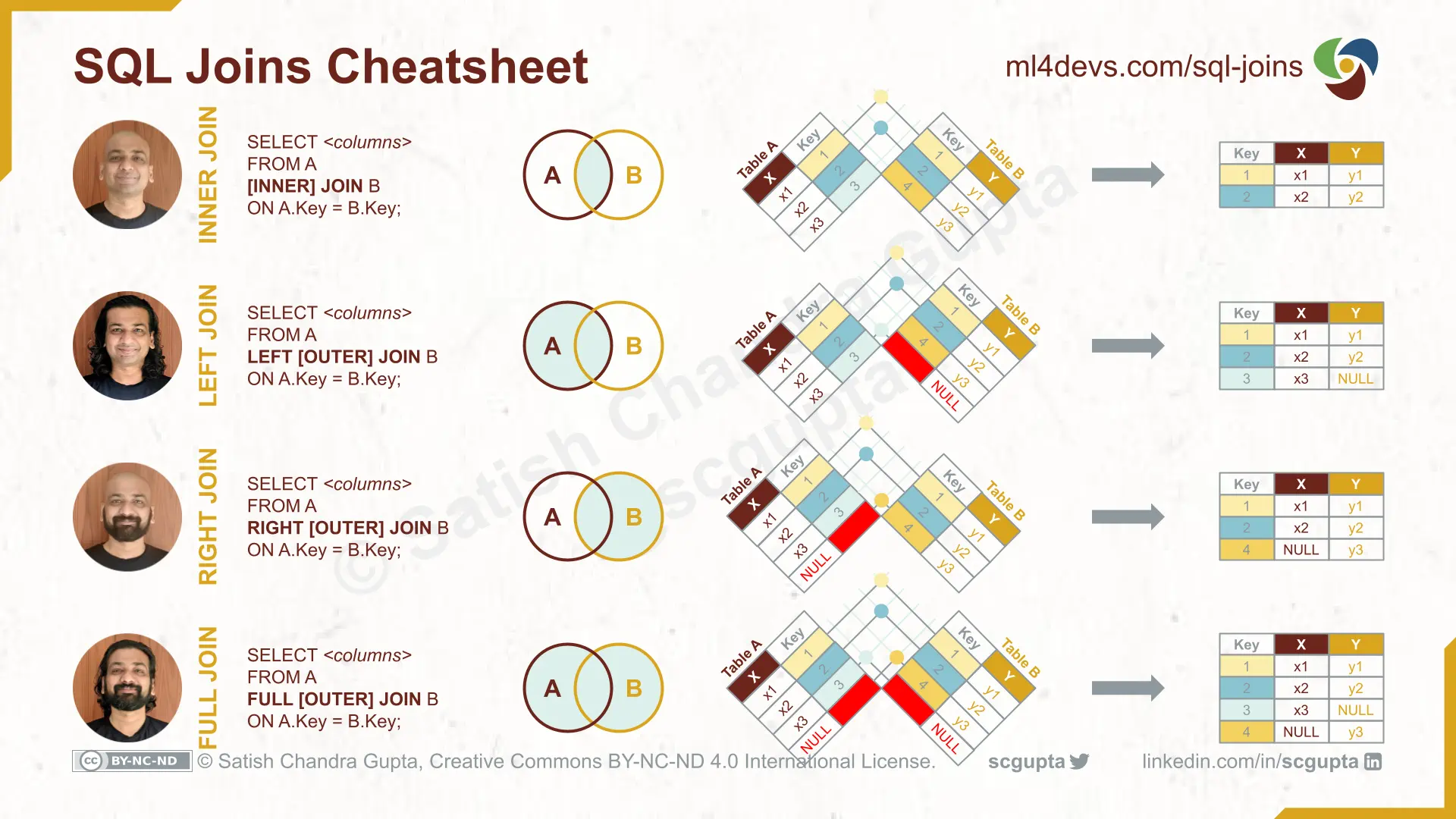
Article: Types of SQL Joins: Inner, Left, Right, and Full
A mind map of statistical modeling (supervised and unsupervised), ensemble models, reinforcement learning, and neural networks, with example algorithms for each.
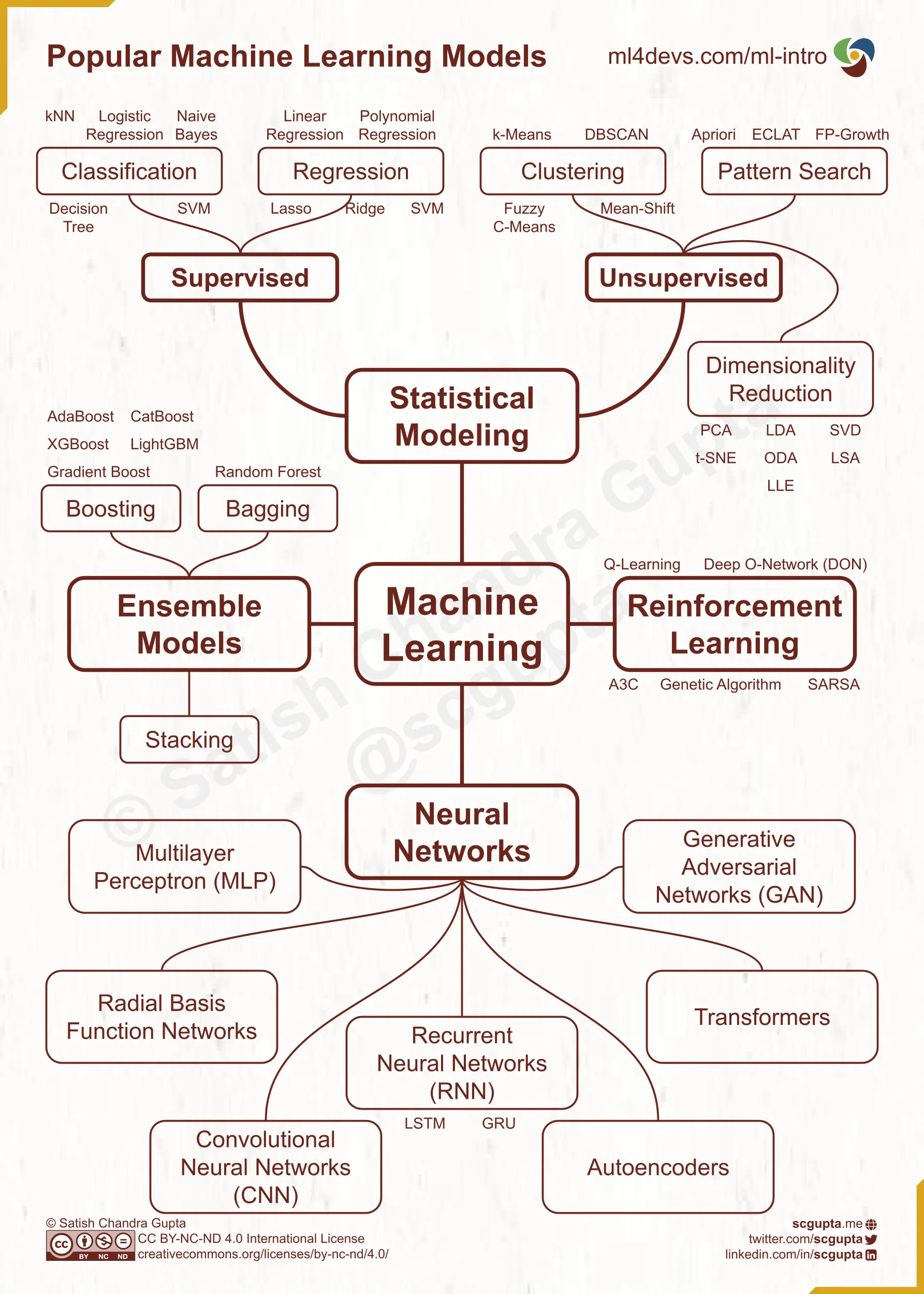
Article: An Engineer's Trek into Machine Learning
Code for itertuples(), list comprehension, map(), NumPy vectorize(), and Pandas vectorization, with benchmark timings against apply().
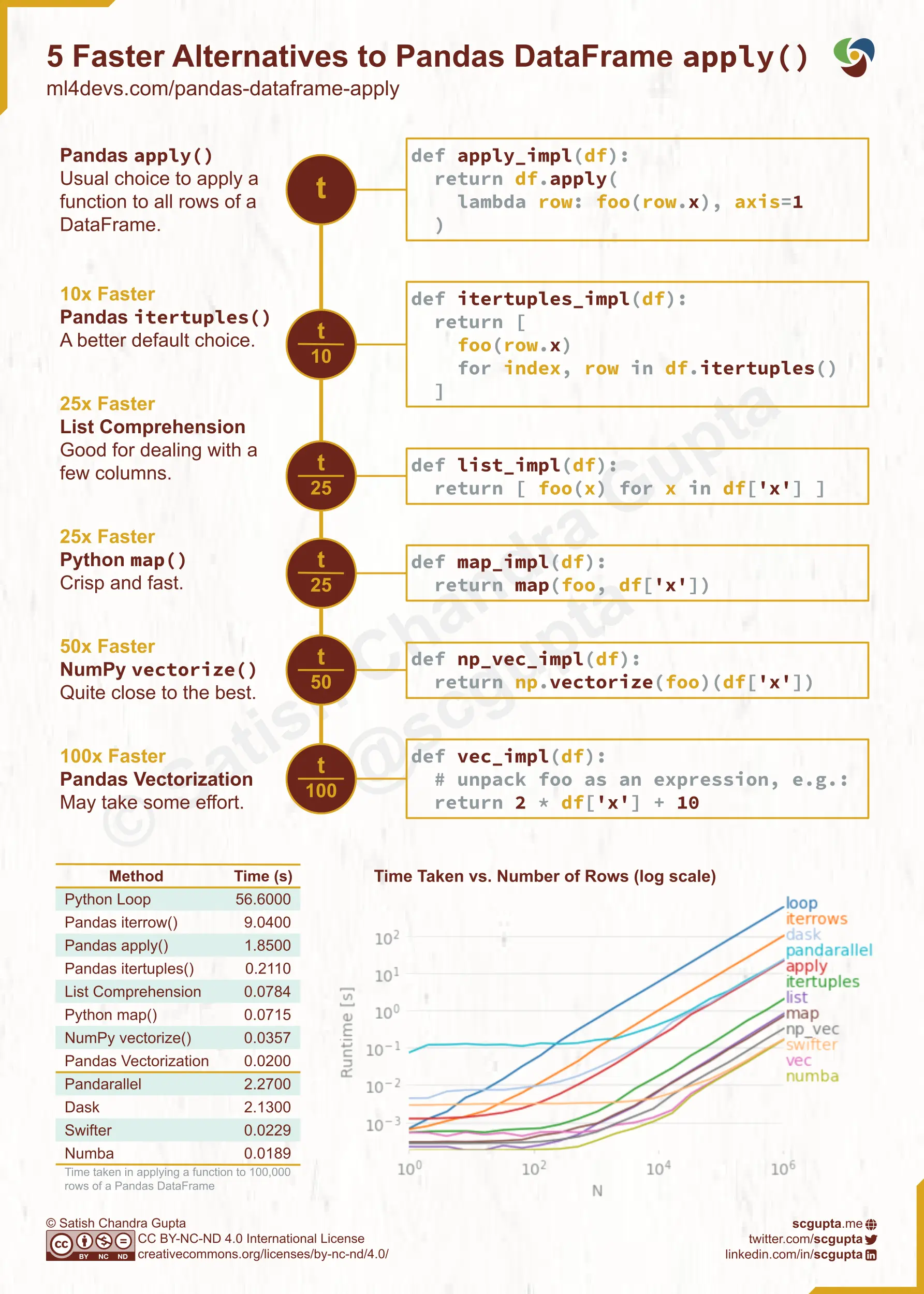
Article: Pandas Apply: 12 Ways to Apply a Function to Each Row in a DataFrame
Data sources (mobile, web, microservices, IoT, and batch) flowing through the capture, ingest, store, compute, and use stages. The streaming path runs through an event queue and stream processing. The batch path runs through a data lake, a data warehouse, and batch processing. Orchestration, data quality, catalog, and governance span all stages.
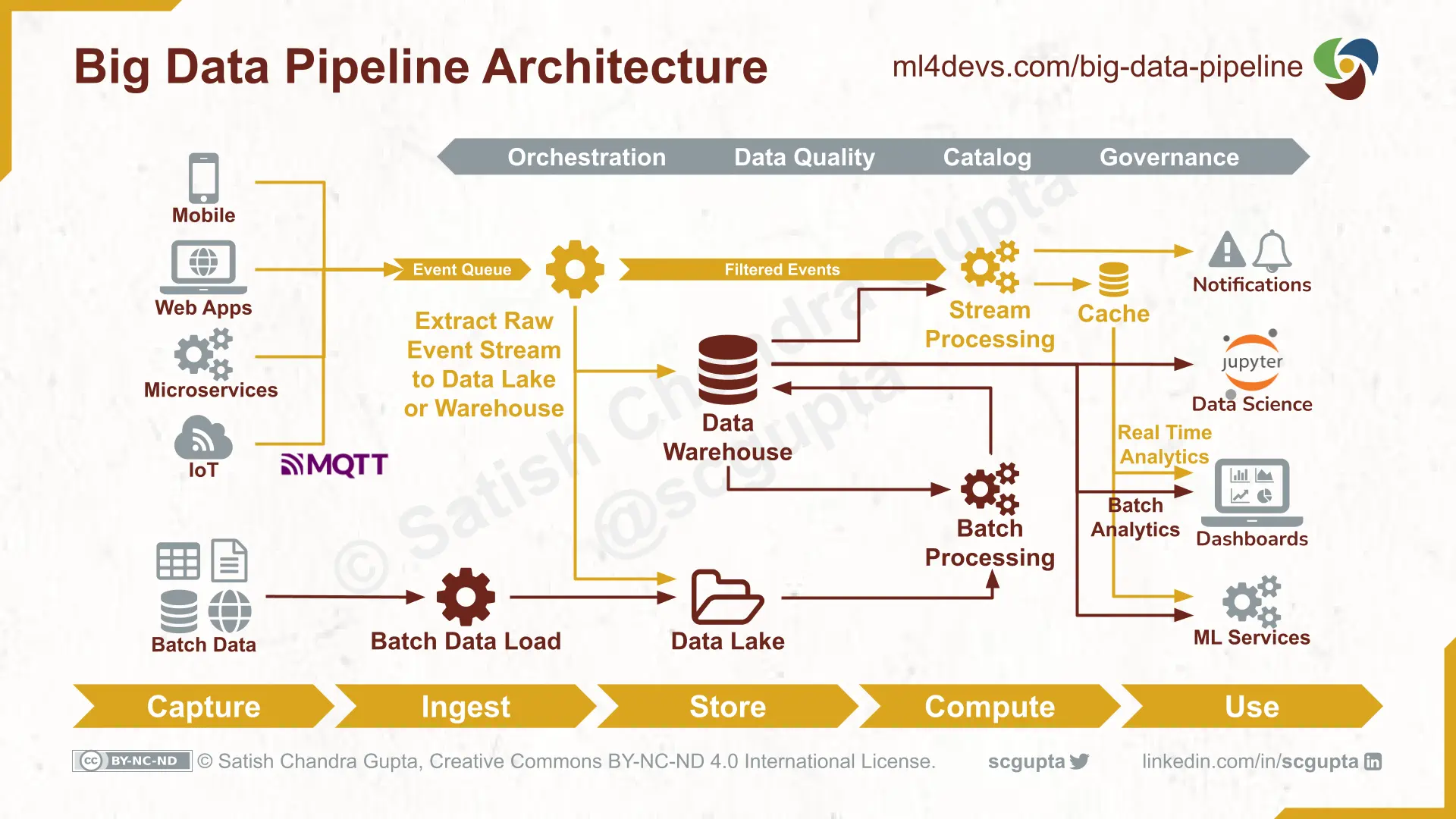
Explainer: Data Architecture: Blueprint of How Data Powers the Business
The five stages of a data pipeline: sources in capture, extract in ingest, load into a data warehouse and data lake in store, transform in compute, and sinks such as dashboards, ML models, and event streams in use.
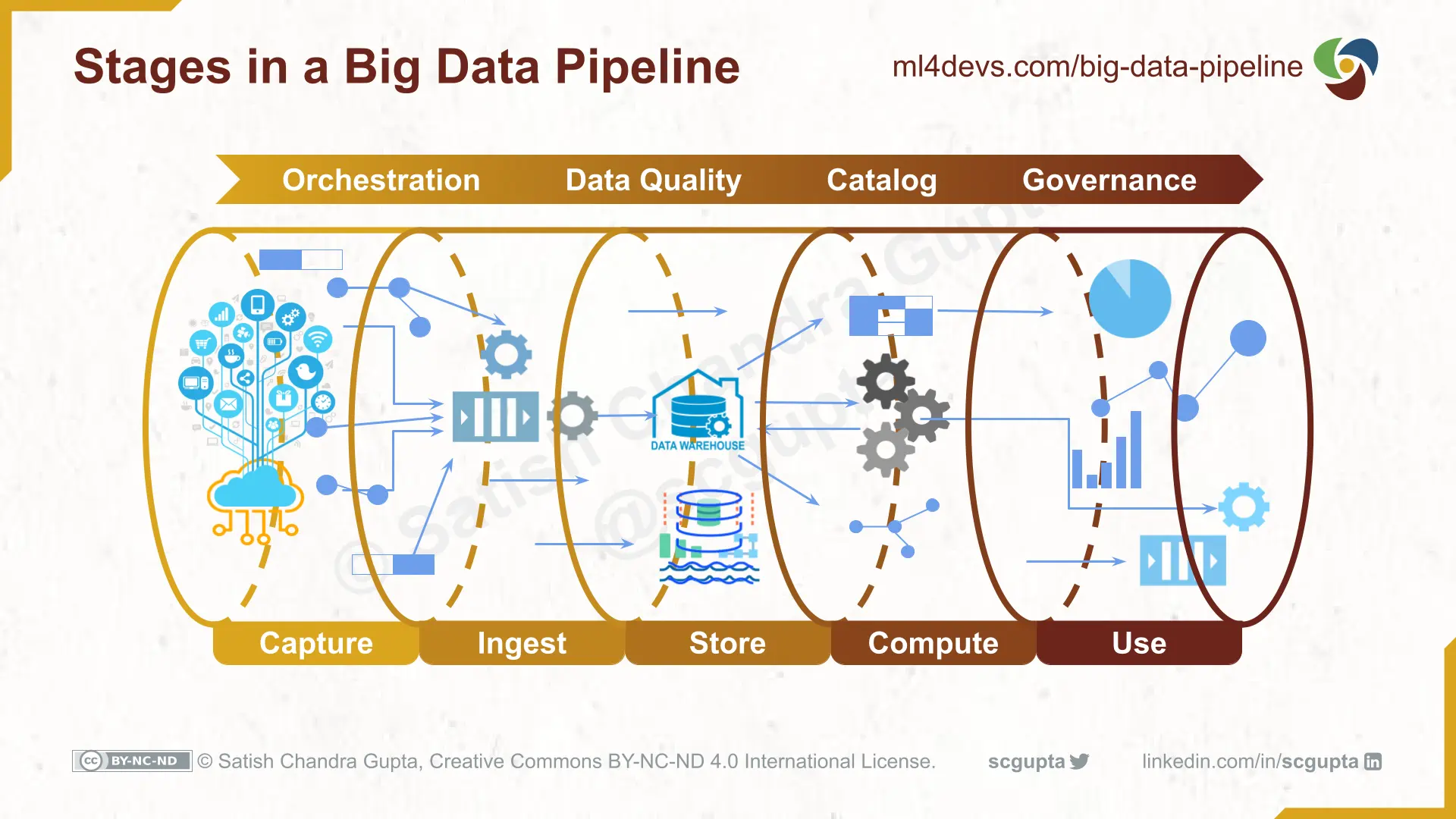
Explainer: Data Pipeline: Batch, Streaming, and Idempotent Patterns
A hypercube along time (Q1 to Q4), product, and geography (NA, LATAM, EMEA, APAC) dimensions, showing the slice, dice, drill down, and roll-up operations.

Explainer: Online Analytical Processing (OLAP) and OLAP Cubes
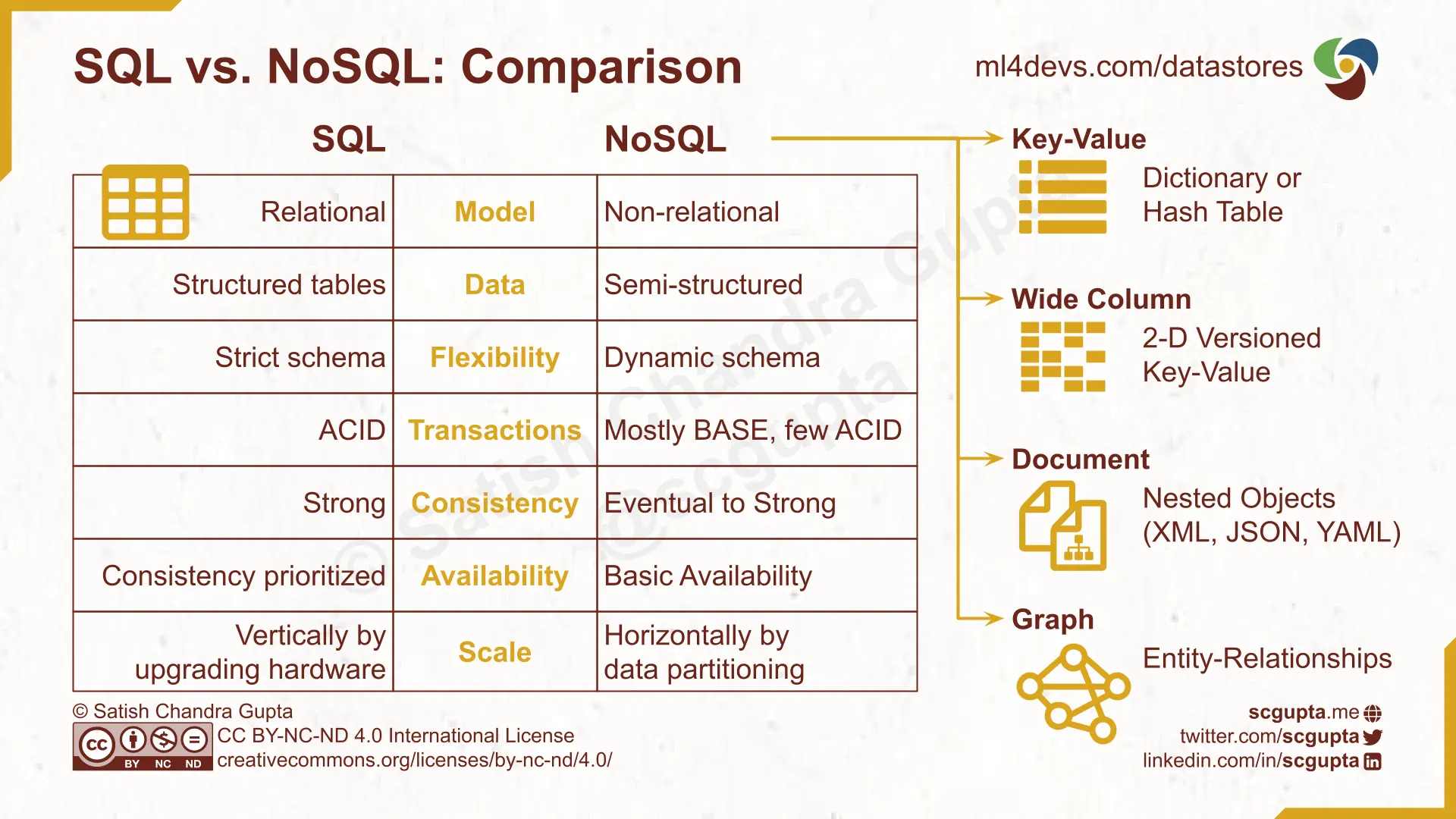
SQL and NoSQL databases compared on model, data, schema flexibility, transactions, consistency, availability, and scale, plus the four NoSQL types: key-value, wide column, document, and graph.
Article: SQL vs. NoSQL Database: When to Use, How to Choose
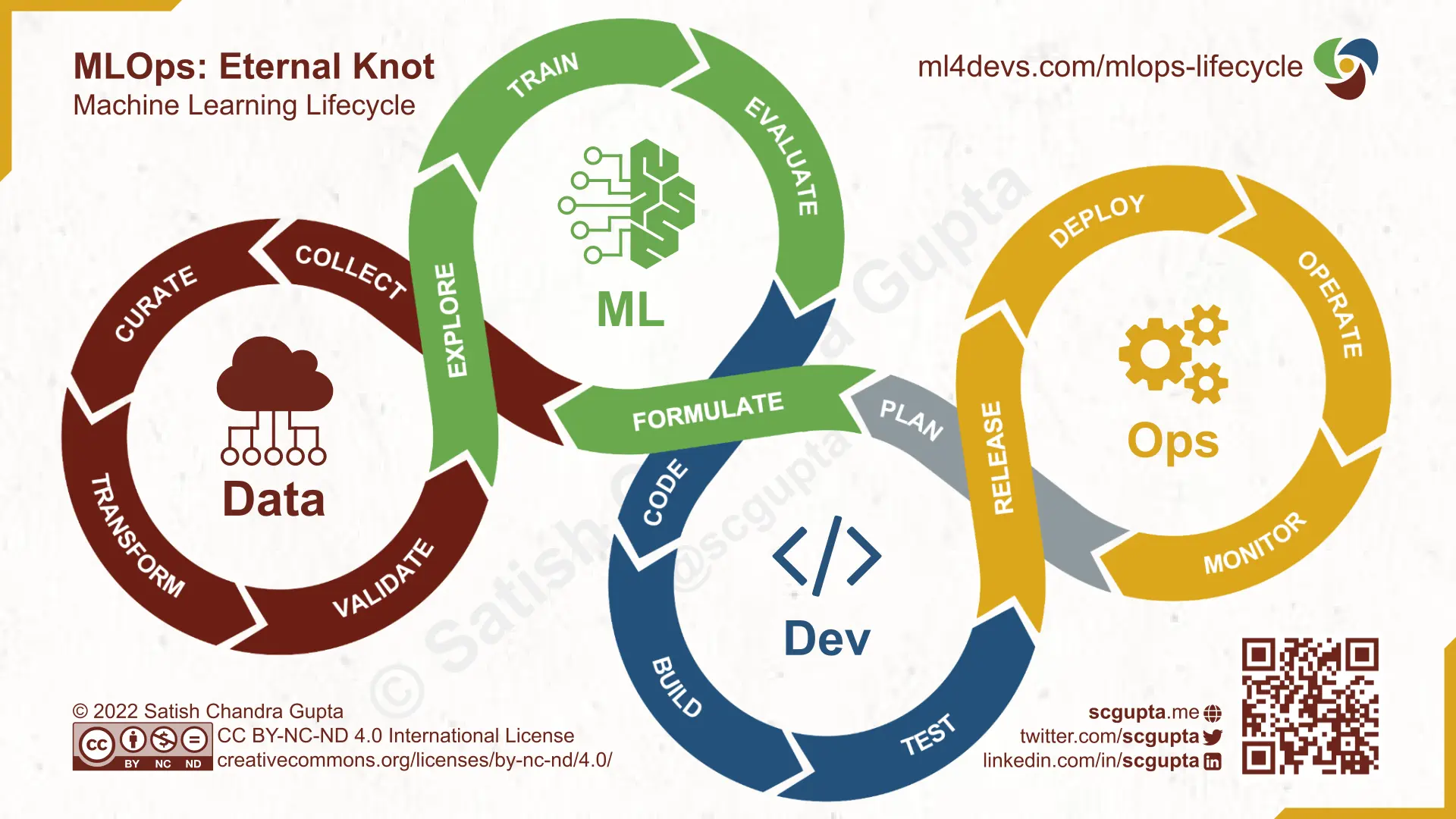
The machine learning lifecycle drawn as an eternal knot of four interlocking loops: Data (collect, curate, transform, validate), ML (explore, train, evaluate, formulate), Dev (plan, code, build, test), and Ops (release, deploy, operate, monitor).
Explainer: MLOps: A Practical Guide To Production Machine Learning